
Interview with author Inge Hulsker
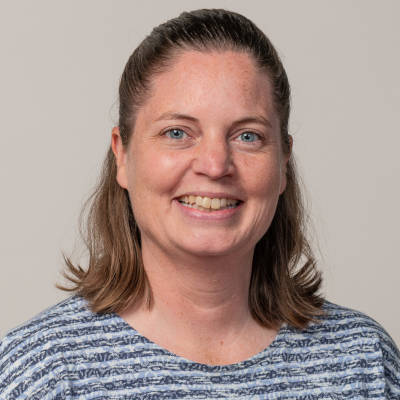
Inge Hulsker is a (former) colleague of mine. She works as a software developer at the National Library in The Hague and is also a writer of Dutch short stories and children’s books (https://www.ingehulsker.nl). She debuted in 2012 with the children’s book "Het verloren volk" (The Lost Nation). This was followed in 2020 by the children’s book "Antirobot" through the Belgian publisher Averbode. Her current book project is called "Abel and the Tasmanians." She also writes short stories, which regularly win prizes and have been included in anthologies. I interviewed her in mid-December 2025 about writing, publishing, and promoting.
The beginning
D: How did you start writing?
I: I don’t really know. I enjoyed writing essays and all that in primary school, but that kind of fizzled out after that. I think I started writing poems when I was 14 or 15, but no one was allowed to read them. I didn’t start seriously until, I think I was about 20 or 25. On a whim, I signed up for a writing week in the Pyrenees, Spain. You were given writing assignments there, and I actually really enjoyed it. And then I started taking a creative writing course, just once a week, and it kind of took off from there. After that, I took more writing courses, including short story courses, and I entered writing competitions, occasionally winning. I thought, that’s fun. That’s kind of how it all started, actually.
D: So you don’t have that romantic idea, that you have to tell your story?
I: (laughing) No, no. I hear that too sometimes, but I think I don’t feel that way. I have a story that needs to be shared?
D: Yes, exactly.
I: No, not at all. No, In the beginning, I was only writing for myself. And if someone read it, I thought: oh, do I really want that? But at some point, it becomes fun, then it’s nice when other people read it.
D: What do you enjoy about writing?
I: The best part is actually when you surprise yourself, so to speak. So you have an idea of where it’s going, and then suddenly, while writing, you come up with a sidetrack, or something happens that makes you think, man, I hadn’t even thought of that beforehand, but now that I’m writing, I suddenly think, meh, I’ll add that, that’s actually nice for the story. That suddenly those puzzle pieces fall into place or something.
The Lost Nation
D: Looking at "The Lost Nation," how long did it take you?
I: I wrote the first draft in a month. During NaNoWriMo, you know that too, right?
D: And in that month you wrote it completely?
I: I wrote the entire first draft that month. It was a bit rubbish, of course. But then I think I worked on it for another year after that. Looking back at it now, I think, I should have gone into it a bit more, actually. So I was satisfied too quickly, so to speak. I should have worked on the structure a bit more… With the books I wrote after that, I thought: 'Don’t be satisfied too quickly, You still have to do some more rework', but then I don’t really feel like doing it anymore.
D: How many drafts did you write of "The Lost Nation"?
I: That’s hard to say, actually. I think only three or four or so. It was more of a matter of constantly adjusting.
D: And was that more about the language, or also about the structure and…
I: It was also about the structure. But I do get into details quickly, so then I actually focus more on the sentence level and things like that. That’s a bit what I find difficult, that part, seeing the bigger picture… that’s exactly what I took a course on. So now I’m thinking about that one manuscript I have, The Tasmanians… I got a whole outline during that course, and I want to compare it to the Tasmanians manuscript to see where the structure needs improvement.
D: What kind of help did you have with The Lost Nation?
I: None, actually. No, I just did that myself. I only asked someone to do the final spellcheck, but that was really just about the spelling. So I didn’t really ask anyone for help with that. Which wasn’t a good idea, in retrospect.
D: Looking back now, what would you change about The Lost Nation?
I: Yes, it’s definitely a matter of balancing the scenes. For example, there are a few scenes that go on for ages, and I think, ‘That doesn’t add much, it should be shorter.’ And then other parts, which are important to the story, need to be described in more detail.
Target audience
D: When you wrote "The Lost Nation," did you have a specific age group in mind?
I: No. it was kind of the first thing I wrote. So I didn’t even know I was going to write a children’s book. I just had an idea and started writing, and then, while I was working, I thought, ‘Oh, that’s really going to be a children’s book.’ Afterwards, I decided it was for ten-year-olds or something. That’s really a thing, I had the same thing with "The Tasmanians." Then, in the feedback, I got the question: "What age group is it for?" and then I thought, hm, I don’t really know myself. But you really have to think about that beforehand. The beginning of "The Tasmanians" seems more for seven-year-olds, while after that, it seems more for ten and older. Maybe I should adjust the beginning a bit, so that it’s a bit more…
D: So that it’s a bit more consistent.
I: Yes.
D: So you didn’t think, when you started writing, ‘This is going to be a young adult book or a children’s book’ or something?
I: It became clear pretty quickly.
D: So how did it end up that way?
I: I think it’s just my style; I love reading children’s books myself.
D: Okay, yes. With my writing, I often get feedback like… I don’t know exactly what it is. Either too sweet or too…
I: I have that too.
D: I don’t really know what it is. I think, ‘I’m going to write an exciting story now’, you know. And then I get feedback… God, what did my sister say? She was really harsh…
I: Ha ha, you have to have that sometimes, yeah.
D: Yes, you have to have that sometimes, but hm. She said like, ‘apart from the sex scene, it’s written childishly’ or something. It’s just all too sweet, not exciting enough.
I: Oh, you have the same problem, I have that too.
D: And then I think: I don’t want that at all!!
I: When I write short stories, I write for adults. For example, if my 12-year-old niece asks: 'can I read that too?', then I say yes. It’s not that there’s anything very adult in it, that she can’t read. But it’s also true for me, yeah, I’m often too sweet. Like with characters, if one of them gets angry for a moment, it’s over immediately…
D: And it’s all in harmony.
I: Exactly, and that doesn’t really make for an exciting story. I also find it difficult to write. But even when I read it, I often find it unbelievable when someone constantly puts their foot in the way, or constantly reacts so annoyingly that you think, no one is really that annoying, but apparently they are.
Advice
D: In retrospect, was there any advice you wish you had heard before you started writing your book?
I: Maybe that you shouldn’t just look at it yourself, that you should ask someone’s opinion and get feedback.
D: Did you really not let anyone read it then?
I: No. Yes, my mother, but she just says ‘nice.’
D: No indeed, that’s not a critical reader, not a proofreader.
I: No, exactly, you need a critical reader, actually especially not family, because they’re too nice. But I would recommend that to everyone, because otherwise you’re a bit… you don’t get the most out of your story.
D: And the other side, which I often hear, is the risk that if you ask other people, everyone will have different opinions.
I: Yes, that’s true. If you ask three people, you’ll get three different opinions. But then you just have to decide for yourself what you think is best. You shouldn’t blindly accept everything. Especially not if you get feedback from someone, of course. They might have completely different ideas about it.
No, I also have my new book, "Tasmanians," which I let my nieces read; they’re kind of the target audience. I printed it out and asked them to write down what they like and don’t like. And then I thought, ‘This is better than letting another adult read it’; you also have to have your target audience give feedback; they’ll see it differently. So I liked that they did that.
D: So they’re the age of the target audience now?
I: They’re 11 and 13 now, so they’re a bit too old for it. They did it a few years ago, when they were the age of my target audience.
Self-publishing
D: You self-published ‘The Lost Nation’. Did you consider taking it to a publisher? Or maybe you did?
I: Yes, I did send it to a few publishers, but I got rejections, and then I thought, I will just self-publish. And I did that through pumbo.nl. I thought it was a good one, and I was happy with it.
D: But if you look at the e-book on bol.com now, it doesn’t say ‘PUMBO’, it says ‘Smashwords’. But you didn’t do anything with Smashwords?
I: No, yes, I did, I also put it on Smashwords. But that’s a different story. Through Smashwords, you can self-publish your stories as e-books, so I also put a few short stories and the book on there. People can then simply download them as e-books for 1 or 2 euros. And then it will indeed be on Amazon and BOL and all those platforms.
D: But there are some pretty well-known names doing that, right?
I: Anyone can just put it on there, so publishers can do that too. I think it’s fun. Every now and then you get an email saying: another one’s been downloaded. Yeah, hmm, probably by you.
D: I read it on KOBO.
I: I didn’t know it was on there, but it’s there probably via Smashwords too.
D: Yes, via bol.com via Smashwords, but then it’s on KOBO too. So you didn’t do anything specific to get it on KOBO?
I: Well, yes.
D: Or checked a box somewhere?
I: I just put it on Smashwords. After uploading the PDF you can choose which sites it can appear on, and I think I checked every box, like: ‘yes, go ahead’ (lauging).
D: "I am gonna be rich!"
I: (laughing) No, I have most of it on there for free, and otherwise it’s really €1.90 or so that you…
D: Oh, The Lost Nation costs €2.74 if you buy it.
I: Oh. I don’t know what’s left for me.
D: No, me neither.
D: To what extent do you think your IT background helped you with the whole process?
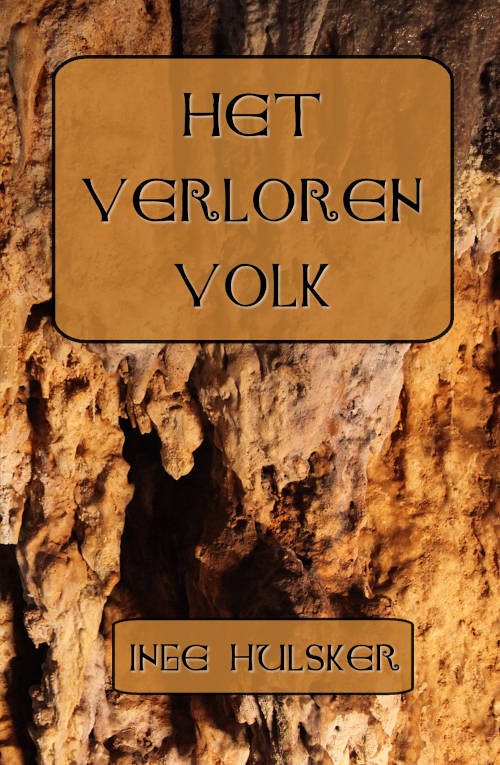
I: You have to create a PDF for the e-book and such, but that’s not really programming, but you do need to be somewhat computer-savvy. There was a whole step-by-step explanation of how to do that, and it was really aimed at people who aren’t much into computers, so they can do it too. And I designed the cover myself, a bit of Photoshopping and stuff like that. It’s helpful if you can do that yourself, because otherwise you have to hire someone to do it. And I created my website, for example, which is helpful if you can do it all yourself. But those are things, I mean, like a WordPress site. It’s possible, but maybe not by everyone.
D: But I think there are a lot of people who want to write, but see that as a barrier.
I: Yes, maybe.
D: Then it depends a little bit, I think, on how much money you have. Whether you think, I’ll make the effort to learn it myself or I’ll ask someone.
I: Yes, but that’s also true. You don’t create a website after you’ve only just written two stories. It’s only later that you think, I’ll do something with a website. If you can’t do it yourself, then the barrier is a bit higher, I think.
Promotion
D: Did you do much to promote your book?
I: No (laughing)
D: Not at all? Or…
I: I didn’t really know how or what. That’s what I think about self-publishing, you need to have a promotion plan and stuff. What I did was give a book launch at the local library in Voorburg. (laughing) So my whole family came; only people I know were there. I also had an anouncement published in the local newspaper, which I thought was nice. But otherwise, where do you start? I tried to put it in the local bookstore…
D: So you also had a paper version?
I: Yes, I made a paper version of it. I really liked that, a real book. I had asked the local bookstore, can I leave a few books there? Well, that was possible. They put them out, and if they sell them, you get the money, and if not, after a certain amount of time, you take them back. That way, they don’t take any risk. So I went to check every now and then, and a few were gone. But then the store went bankrupt, so (laughing) I never saw that money, nor the remaining books.
D: No, really? Oh!
I: I got it with a lot of effort at a bookstore, and then it went bankrupt.
D: And how many books did you have printed?
I: Um, something like 100 or 150, something like that. I don’t remember the exact number. (laughing) But I have a large family. It was print on demand, but you still have to order a certain number to get a discount if you do a print run of 100 copies. But you can still order now, and it will be printed on demand. But yeah, I think I sold about 50 copies or so. To everyone I know, and to two strangers.
D: Yes, exactly, that’s difficult. Recently, someone told me that my sister is a “bookfluencer.” Are you familiar with that term?
I: (laughing) Oh yes, “bookstagrammers” or something like that. But this was thirteen years ago, so it didn’t exist back then. But now it’s indeed… it seems to be good promotion, doing a kind of ‘book tour’, where every week a book reviewer shares a review on their social media, and then the next week another one, and you create a whole chain of reviewers.
D: So the most important thing is to stay in the spotlight.
I: Yes, because that’s kind of how it is. I’m on social media myself, but if I post about my own book all the time, saying “oh look, this is my book” and “oh here, my book is still for sale,” then it just gets annoying. And you only reach a limited number of people. My network are mostly other writers, actually. That’s not necessarily helpful either. So I find promotion a difficult issue. So people who want to write reviews, book bloggers, I think that’s kind of the right way to get exposure.
D: Yes, it’s difficult, isn’t it? And I can get so depressed that so many books are being published.
I: Yes, there’s so much, you really disappear in the big pile, yes.
Motivation
D: How do you stay motivated?
I: By entering short story competitions.
D: (laughing) Very concrete!
I: Yes, it’s just short and direct results. Because indeed, if you work on a book for a year, you don’t get any feedback, you don’t know if it’s any good, yes, I get demotivated then. It helps that I have a writing buddy with whom I share a piece every now and then and get feedback, so you know you’re on the right track. But in between, I always just write short stories. Then you get ‘you’ve been selected for an anthology,’ and you think: 'That’s nice. Good work'. Yesterday I was in Den Bosch to pick up a Christmas story collection that includes my story. But they had 100 submissions, and they put 50 in the collection, so that was a fairly broad selection. But still nice.
D: That’s definitely something you can get motivation from. But they’re still short stories. In the sense that it’s not the ultimate, short stories. Unless you say: I just enjoy writing and working on them. But if you’re ambitious and want to earn money from writing or something…
I: I’ve kind of given up on that. It’s pretty hopeless, yes, if you’re in that children’s corner. I know a few writers who make money from it, but that’s actually… they do school performances, they teach…
D: Yes, then you have to do all kinds of things that you don’t even enjoy.
I: Luckily, they usually enjoy it.
D: Really? Maybe it’s just me. Writing often is a struggle for me, but when you’re working, and sometimes, just like you said, when you surprise yourself…
I: Yes, most of the time writing is just a struggle, indeed. (laughing) It’s not fun at all, actually. But having written something is fun.
D: No, exactly, that’s it. Having written something, yes, that’s fun.
I: Sometimes I’m fiddling around with something and I think, why am I doing this? But then later, the story is still going through your head, and you think, oh wait, an idea, and then you think, oh yes, it is a nice story after all, I’ll just keep going. No, writing itself isn’t always fun.
D: No, that always surprises me. When I hear people say, “Writing is fun!”, I think, ‘What am I doing wrong?’
I: Because very often when you’re writing, you think, “No, this isn’t good,” “No, it’s not working,” and so on.
D: Yes, and nothing comes to mind, and what should happen next?
I: But what are your ambitions with writing?
D: My big ambition was to be able to make a living from digital-ink and to spend half my time writing and half my time programming.
I: And then actually publish a book?
D: Yes, but not to make a living from it, just to have the freedom and time to write. Because I just notice that when you do it on the side, it’s just…
I: Yes, that’s right. I always find that when I’m taking a course or there’s a deadline, I write something again. But in between, I don’t know, time always flies by. Then you think, Jesus, I haven’t written anything in a week.
D: Have you ever had periods where you really had a rhythm?
I: No. That’s the theory of working four days and then having one day as a writing day. But I do all kinds of other things on that day and then maybe write for half an hour in the evening. No, I haven’t managed to do that… But you also have Wednesdays to work on digital ink, does that work out?
D: Yes, no, that definitely works.
I: But if you said you were going to write a story or a book that day, then, um, would it be more difficult?
D: I have two hours to write on Sunday morning.
I: Oh, okay, you have that specific block of time.
D: Yes, once the regular stuff is done, the dog has been walked, and we’ve had breakfast etcetera, then I write from 10 to 12. That’s already very difficult to maintain. And in those two hours, you realize that you need at least half an hour to get back into it.
I: Yes, they always say you have to write every day to stay in the zone. But who has time to write every day?
D: Yes, you’d have to be a full-time writer.
I: Yes, I could free up an hour every evening.
D: Yes, exactly, that would be possible, yes. And really, respect, when I hear people say they have to be at work at 8 a.m. or leave the house at 7 a.m., and then they get up an hour earlier so they can write before work.
I: (laughing) Yes, I’m not a morning person, so that’s never going to happen. But I could say that I write every evening between 11 and 12, because that’s when I write best. But then I end up watching TV, for example, not doing anything.
Abel and the Tasmanians
D: Your current project, Abel and the Tasmanians, how active is it?
I: (laughing) Uh, not active, I was working on it until about a year ago, and now it’s waiting for me to do something with it again.
D: And why does it get left behind?
I: I have the first draft, and I need to work on the structure. And then I asked someone, a kind of writing coach, but she didn’t have time. And then it kind of stalled.
D. Okay.
I: Yes, I enjoy writing the first draft. But then you have that lying around, and then you really have to work hard. Yeah, but I’m not very good at finishing long projects.
Afterword: Inge has created an account on digital-ink.app where she wants to work on her project "Abel and the Tasmanians" and discover how the digital-ink "plot designer" can help her further develop the story’s structure and finish her book.